

September 11, 2026

Understanding Moldova beyond the headlines

September 11, 2026

Understanding Moldova beyond the headlines

Reports

Original reports and recurring market updates.

Reports

Moldova EV charging infrastructure: September 2026 update

Moldova’s public EV charging network reached 307 stations and 18.4 MW by September 2026, up 16% since January. The market is diversifying: the leader’s share fell from 50% to 43% as new operators expand faster. DC fast chargers now number 119, with GB/T connectors growing faster than CCS2. Six district centers still have no coverage. A data report based on four snapshots from Moldova Decoded’s independent station database.

Read More

Reports

Geographic Distribution & Corridor Coverage July 2026

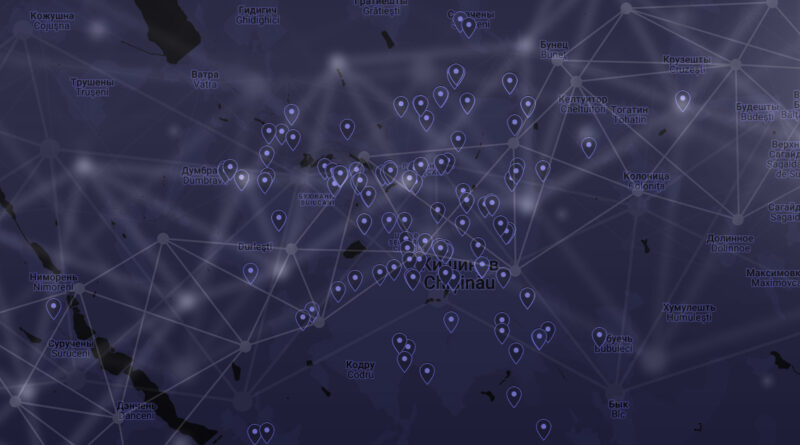
Moldova’s EV charging network covers 31 settlements, but 57% of all stations are inside Chișinău — a city with just 25% of the population. The main north-south corridor to the Danube port has an 88 km stretch with no charging at all. Three of five border crossings are unreachable by EV without careful planning. Only one highway — M14 to the north — has adequate spacing. This geographic supplement maps every station by settlement, measures corridor gaps, and identifies the eight raion centers still at zero.

Read More
Reports

Moldova EV Market: Infrastructure Report — July 2026

Moldova’s EV charging network grew 37% in seven months — but the real story is who is building and who has stopped. EV Point, the market leader, shrank for the first time. ECharge became the most active builder. Two operators added nothing in seven months. This comparative analysis tracks station counts, capacity, and market share shifts across all operators from December 2025 to July 2026.

Read More
Reports

Moldova EV Market: Infrastructure Report — January 2026

With 13.8 MW of installed charging capacity serving fewer than 10,000 BEVs, Moldova’s EV infrastructure is running at 4.5% utilization. A new weight-based road tax — structurally penalizing mid-size and large electric vehicles — threatens to slow fleet growth further. This independent analysis maps the supply-demand imbalance, benchmarks against AFIR requirements, compares operator tariffs, and proposes a two-track strategy: optimize the oversaturated urban network and build selectively along TEN-T corridors.

Read More